
The Joseph Principle: AI, Church Finances & Genesis 41
by Erin Ward, ChurchReady Co-Founder
You've probably preached Genesis 41 more than once. The story is almost too vivid to miss: seven fat cows devoured by seven gaunt ones. Seven full heads of grain swallowed by seven thin ones. A dream that troubled a pharaoh enough to reach into a prison for an interpreter.
But here's the question most of us leave on the sermon prep table. What if this story isn't just a narrative about Joseph's rise to power? What if it's also a leadership manual for the moment you're living in right now?
Across the country, pastors are watching something shift beneath their feet. Giving patterns have grown more volatile. Working-age members are navigating job uncertainty they didn't anticipate. Younger congregants are caught in income plateaus even when they're employed. And behind all of it, quietly accelerating, is an economic transformation driven by artificial intelligence that is reshaping how work, and therefore how income, functions for millions of American households. The question of AI and the future church isn't arriving. It's already here.
If your church's budget depends primarily on the wages and salaries of your congregation, Joseph's story isn't ancient history. It's a briefing for the season ahead.
The Story We Think We Know, and the One We Miss
Most of us engage with Genesis 41 as the climax of Joseph's personal journey: the pit to the palace, betrayal redeemed, faithfulness vindicated. All of that is true and worth celebrating.
But tucked inside the drama is a framework for leadership under uncertainty that is breathtaking in its clarity.
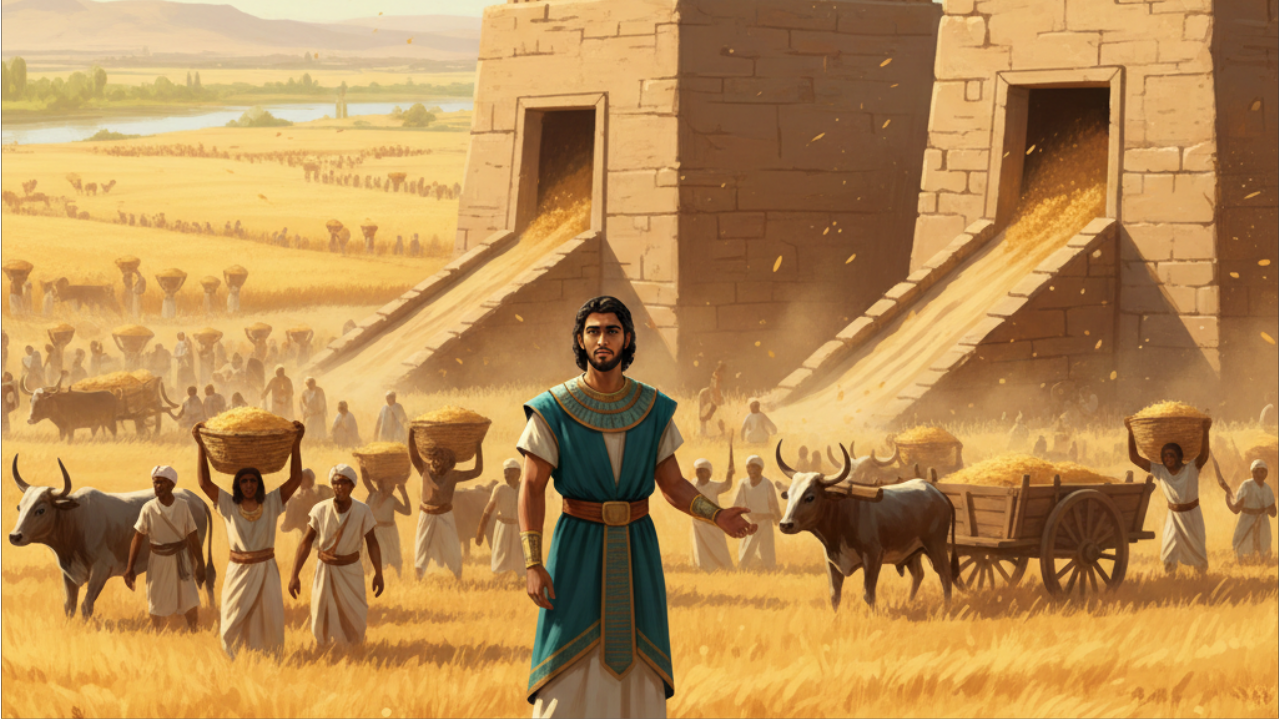
Here's what Joseph actually does when he stands before Pharaoh. He interprets present signals as indicators of a future trend. He names the coming challenge directly and without softening. He pivots from diagnosis to strategy. And he proposes building infrastructure now, during abundance, so the mission of keeping people alive can be sustained through scarcity.
Notice what Joseph does not do. He does not tell Pharaoh to pray harder and trust that the grain will appear. He does not minimize the coming famine. He does not wait for the first year of scarcity to begin making plans.
He sees, he names, he acts. During the years of plenty.
That is the Joseph Principle. In our conversations with pastors, we consistently see the same pattern play out: the difference between churches that are still fine right now and churches that are actually ready comes down to whether this kind of seeing, naming, and acting happened while there was still margin to do it well.
What Faithful, Future-Facing Stewardship Actually Requires
This posture is not a corporate concept wearing pastoral clothing. It is the ancient, biblical practice of faithfully managing God's resources with future-oriented wisdom, preparing during seasons of strength to sustain mission through seasons of uncertainty.
It holds two things simultaneously that our culture tends to separate. We plan as if it depends on us. We pray as if it depends on God.
Joseph held both. Noah held both. The early church held both: they depended on the Holy Spirit and organized deacons to manage resources so the vulnerable weren't overlooked (Acts 6).
The alternative is what we might call reactive leadership: "We'll cross that bridge when we come to it." This isn't faithlessness so much as it's a failure to apply the wisdom of Proverbs 22:3, that the wise see danger and take refuge, while the simple keep going and pay the penalty.
What AI and Church Giving Have in Common With Pharaoh's Dream
If Joseph were sitting across from you today, not interpreting a pharaoh's dream but reading labor market reports, here is what he would tell you.
There is a trend in motion. It is directional, and it is accelerating, and its trajectory leads somewhere churches built on traditional income assumptions need to pay attention to.
Artificial intelligence is reshaping labor markets in ways that are beginning to register in household finances across a wide range of professions. Routine cognitive work is being automated. White-collar roles once considered AI-proof are experiencing productivity displacement. Industries ranging from finance to logistics to healthcare administration are incorporating AI at a pace that is outrunning the economy's ability to retrain displaced workers into comparable income positions.
For most American congregations, the connection is direct: your church's primary revenue stream depends on the employment income of your congregation. If their jobs change, their giving capacity changes. If their income erodes, even gradually, your budget faces pressure, in a pattern that looks a great deal like Pharaoh's dream.
The question Joseph would ask you is not whether you believe in God's provision. Of course you do. The question is whether you're analyzing your current capacity, optimizing what you have, and maximizing what's been entrusted to you, before the pressure arrives.
The Three Phases of Church Budget and AI Readiness
Phase 1: Interpretation (Seeing What's Coming)
Joseph didn't panic. He interpreted the signs honestly and named what he saw.
For pastors today, this phase looks like honest financial assessment. What does our giving data actually show over the past three years? How reliant are we on employment income from industries being reshaped by AI? How much margin do we carry? What would a 10 to 15 percent reduction in giving look like for our operational capacity?
This isn't fear talking. Proverbs 27:23 calls it knowing the condition of your flocks. You cannot lead wisely through uncertainty if you don't know what you're actually working with.
Phase 2: Infrastructure (Building During Abundance)
Joseph analyzed Egypt's existing capacity, optimized a system to extract maximum value from the years of abundance, and maximized what was there so thoroughly that Egypt not only survived but became the provision source for surrounding nations. He acted before the famine arrived.
This is what faithful, future-facing stewardship looks like in practice: operational efficiency that reduces waste, diversified revenue streams that reduce single-source dependency, digital reach that extends the church's presence beyond Sunday morning, and community systems that serve people when economic stress makes belonging more valuable than programming.
That infrastructure gets built now, not during the famine.
Phase 3: Mission Sustainability (Serving Through Scarcity)
Here is the outcome of Joseph's preparation: not only did Egypt survive the famine, surrounding nations came to Egypt for help. His preparation didn't just protect one people. It created capacity to serve many.
That's the vision for a resilient church: not just survival, but a church that has built such operational strength, financial margin, and community depth that when economic pressure hits its surrounding neighborhood, it has capacity to serve.
Two Paths, One Story
Every pastor reading this is somewhere between two default responses right now.
The first is reactive leadership: "We'll address it when it becomes a real problem. Our congregation is fine. We have enough margin for now." This is the natural human tendency to delay preparation until urgency forces it, which is exactly when preparation becomes most costly and most painful.
The second is the path Joseph modeled: "We don't know exactly how this will unfold, but we can see the directional trends. We can assess our vulnerabilities now, while we have capacity. We can build readiness across multiple possible futures, and that work will strengthen our ministry regardless of which future arrives." Every pastor is already standing somewhere inside the reality of AI and the future church, whether they've named it that yet or not.
Joseph chose the second path. Not because he knew precisely how bad the famine would be or when it would peak, but because he could see the trend, name it honestly, and begin building before the crisis made building impossible.
Books like Carey Nieuwhof's AI and the Future Church are beginning to name what church leaders are already sensing, but the conversation that follows the awareness is where the real work starts. Awareness of the shift is the first move. The second move is Joseph's: analyzing what you have, optimizing the systems you're running, and maximizing the resources God has entrusted to you, before the pressure arrives.
Preparation Is Faith in Action
Some pastors hesitate here. Strategic preparation can feel like it signals a lack of trust. Like if we really believed God would provide, we wouldn't need contingency plans.
But look at the biblical record. Joseph had extraordinary faith and analyzed, optimized, and maximized what Egypt had. Noah trusted God completely and built for 120 years. Nehemiah prayed without ceasing and developed a meticulous construction plan. The early church relied entirely on the Spirit and organized deacons to manage resources faithfully.
Proverbs 22:3 doesn't say the wise avoid danger. It says they see it and take refuge. Clear-eyed, faithful preparation.
This posture holds both truths at once: God is sovereign, and we steward wisely. These aren't competing convictions. Preparation is often what trusting God in action actually looks like.
Joseph's story doesn't ask us whether we believe God can provide. He clearly can, and He clearly does. Genesis 41 asks pastoral leaders something simpler and more uncomfortable: when the season of plenty is in front of you, will you lead like Joseph did, or wait for scarcity to force your hand?
Understanding that the pressure is coming is the first step. Knowing exactly where your church is exposed, and where your giving base carries the most vulnerability to AI and the future church, is what makes the next step possible.
In a world growing more artificial each day, people will become extremely hungry for hope, for unchanging truth, and for genuine community, which means your church has never been more needed. This is a great opportunity for your church, but being needed and being ready are two different things. If you have not yet considered how AI disruptions are reshaping church budgets and the lives and faith of the people in the pews, clarity before action is the right place to start. The Church AI Readiness Assessment gives you that clarity. In ten minutes, it will show you exactly where your church stands and what to address first.
You don't need to predict the future perfectly to lead through it wisely. Joseph didn't. You just need to see what's in front of you—and start building.


