Why Pastoral Burnout Might Be a Church Structure Problem
by Erin Ward, ChurchReady Co-Founder
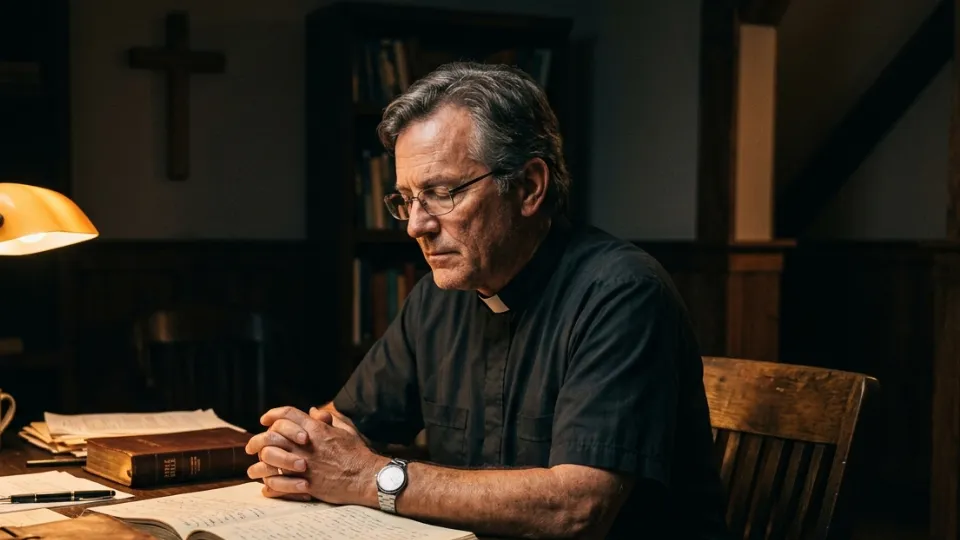
He told me he hadn't cried in three years because he had used up everything he had, and somewhere in the middle of his seventh consecutive difficult year in ministry, the well ran dry. He could still preach. He could still show up. But when a grieving widow needed him to sit with her in the hospital, something in him was calculating how he would get through it rather than being present in it.
He was describing pastoral burnout. He was also describing what's quietly happening in churches across the country, and why the timing matters so much.
The Pastor as the Congregation's Emotional Infrastructure
Pastoral care isn't a program. It's a posture. And for most pastors, it's a posture they hold continuously, which means it's also a continuous expenditure of emotional, spiritual, and relational energy.
Barna's most recent data puts the number of pastors seriously considering leaving ministry at 24 percent as of early 2026. That's a meaningful drop from the 42 percent peak in 2022. The direction is encouraging. The absolute number isn't. One in four senior pastors is still close enough to the edge that the question of staying is genuinely live for them.
The pattern underneath the statistic is the one worth understanding. Pastors who thrive long-term aren't the ones who figured out how to want less from ministry. They're the ones whose churches built actual support structures around them. Barna's parallel research is direct: pastoral retention isn't primarily a personal resilience issue. It's a church culture and systems issue. The pastor who survives is often the pastor whose congregation decided to share the load.
That's a structural observation. The question it opens is whether your church is one building toward that reality, or assuming it already has it.
When the Caseload Doubles Before the Staff Does
Pastoral care has always been demanding. What's changing is the nature and volume of what's arriving at the pastor's door. The question of AI and the future church runs directly through this. For decades, the primary presenting needs in most congregations were grief, conflict, marriage strain, and financial hardship. Pastors learned how to hold those things. Many became genuinely skilled at it. But the combination of pressures building in the culture right now is producing a different kind of need in people, one that's harder to categorize and harder to resolve.
A family comes in because a parent lost a job to an automated system. The loss isn't just income. It's identity. It's the question of who he is without what he did. The counseling demand is pastoral and psychological at once, which means it falls between the chairs of most churches' existing care structures.
His wife is managing both the household economics and his emotional withdrawal. Their teenager is watching a family that used to be stable absorb pressure it wasn't built to hold. Three people, three layers of need, one visit. The pastor who was already carrying too much carries more.
Current displacement trends suggest these presenting needs will grow in number and complexity as automation continues reshaping the labor market. The question every church needs to sit with is whether its pastoral care capacity was built for the congregation it has now, or the congregation it had a decade ago.
The Data Point Most Churches Haven't Solved
In 2015, 37 percent of pastors said they received meaningful spiritual and peer support on a regular basis. By 2022, that number had dropped to 22 percent. A pastor who is carrying more than he can hold, who is receiving less support than he needs, and who is being asked to care for an increasing volume of complex need isn't in a stable position. He's in a deteriorating one.
The institutional response has typically been self-care conversations and sabbatical policies. Those things matter. But they're upstream interventions for a problem that is also structural. The pastoral care load doesn't shrink when the pastor takes a week off. It waits.
The churches building real resilience on this front are doing something different. They're developing lay pastoral care capacity, not to replace the pastor, but to extend the church's reach into need the pastor can't personally hold. They're rethinking what it means for a congregation to care for itself. They're building what Acts 2 demonstrated was possible: the body functioning as the distributed care infrastructure of a community, not the full weight balanced on a single person.
The Visionary Steward Asks a Different Question
A reactive leader asks how to help a burned-out pastor recover.
A visionary steward asks whether the church is structured in a way that requires a single person to carry what the whole body was meant to share, and then builds accordingly.
The difference isn't primarily strategic. It's theological. The church as organism was never designed to concentrate pastoral care in one role and leave that person to manage the volume alone. The body of Christ cares for itself through the body. That principle isn't a program. It's an architecture.
Proverbs 21:5 offers a frame that most stewardship conversations never reach: the plans of the diligent lead to abundance, but hasty shortcuts lead to poverty. Applied to pastoral care, the hasty shortcut is assuming the current model will hold as the weight increases. The path of the diligent builds capacity before the crisis, while there's still capacity to build with.
Carey Nieuwhof's AI and the Future Church is raising the right questions about the pastoral stakes of this shift. What the burnout data adds to that conversation is the internal dimension: the pastoral care infrastructure is under strain at precisely the moment it's being asked to carry more. Both the external disruption and the internal capacity question need to be named together.
Building the Architecture Before the Weight Arrives
The pastor at the start of this piece eventually told his board what he needed. They heard him. They built something. He's still in ministry. Not every pastor gets that conversation. Not every board is ready for it.
Here's the question Visionary Stewardship puts on the table: not whether your pastor is struggling, but whether your church is built in a way that would surface that struggle before it became a silence, and respond to it before it became a departure.
That kind of church doesn't happen by accident. It's built through deliberate investment in lay care capacity, in operational systems that protect the pastor's time for the work only they can do, and in a leadership culture willing to look honestly at what it's asking of the person at the center of it all.
The Conversation Your Church Needs to Have
Pastoral burnout isn't a data problem to be optimized. But the questions a church asks about its own care capacity determine whether the people inside it are truly being held. If you haven't evaluated your church's pastoral care honestly, this is the moment. The weight on your pastor is real. The solution isn't to ask more from him. It's to build a church strong enough to carry it with him.
The Church AI Readiness Assessment gives your leadership team a clear picture of the structural dimensions that determine whether your pastoral care capacity is built for what's coming. It's free and takes less than ten minutes.