AI and the Future Church's Discipleship Problem
by Erin Ward, ChurchReady Co-Founder
Jesus didn't invite people to master content. He invited them to follow him. The distinction matters more now than it has in a long time.
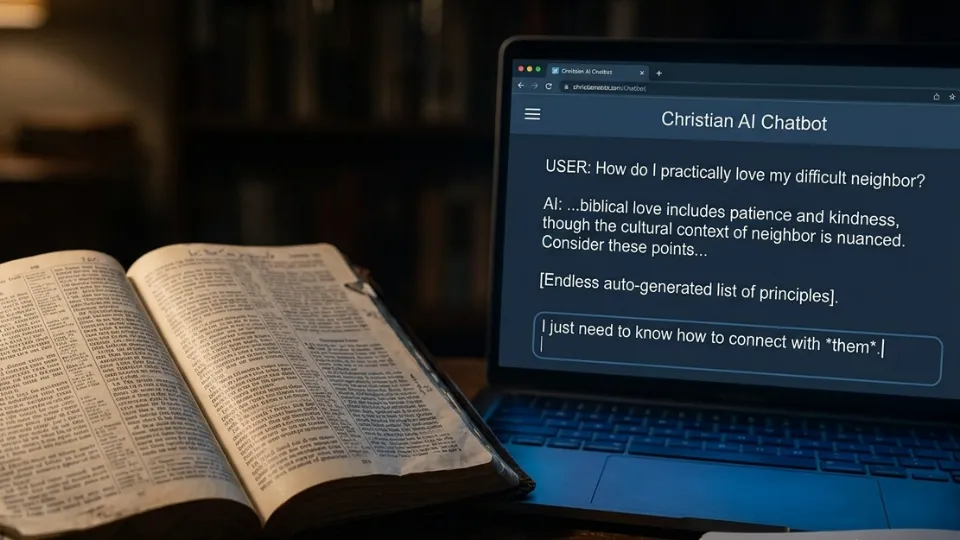
For most of Christian history, the barrier to theological knowledge was access. People didn't know enough. The pastoral and discipleship task was largely about getting truth into the hands and minds of ordinary believers. That problem has been solved, definitively, by the internet and now by AI. The barrier to theological information is effectively gone. You can get a detailed commentary on any passage of Scripture from an AI tool in seconds, at 2 a.m., without a relationship, without accountability, without a community.
The question this creates isn't whether that's a good or bad development. It's whether your church has noticed that the discipleship problem has changed, and whether your approach to discipleship has changed with it.
A Discipleship Gap That Has Been Widening for Years
Before naming the AI dimension specifically, the flame deserves its full weight. Discipleship depth has been one of the most consistently identified gaps in the evangelical church for at least two decades. Churches grow. Knowledge of Scripture increases. And yet the gap between what people know and how they live remains wide. Programs multiply. Transformation lags.
A 2025 Lifeway Research report found that engagement with counseling training and the development of lay counseling ministries has declined steadily over the past decade, even as pastoral care demands have increased. Small group participation rates and genuine discipleship depth have remained challenges across denominations. These aren't program failures. They reflect something structural about the gap between information transfer and genuine transformation.
This is the flame. Not a lack of content. A lack of the conditions in which transformation actually happens.
What AI Is Doing to the Transformation Problem
AI gives instant access to unlimited theological content. Commentaries, devotionals, prayer language, sermon illustrations, theological positions across every tradition: all of it available, personalized, responsive, and frictionless. The question of AI and the future church runs through this before it runs through any financial metric. For someone who wants to know more about their faith, AI is an extraordinary resource. For someone who wants to be transformed, it may be exactly the wrong tool.
Here's a thought I have been pondering about becoming like Christ as more people are turning to AI for spiritual guidance: "Much of our formation happens in silence, uncertainty, and ordinary faithfulness. AI works against this grain as it fills silence, resolves uncertainty, and removes waiting." That is a precise description of what transformation actually requires, and what AI, by design, cannot provide.
Transformation in the biblical sense isn't the accumulation of insight. It's the slow reshaping of the person through encounter with God in Scripture, in prayer, in community, in the friction of real discipleship relationships. It happens through the wrestling, not through the resolution. AI resolves. Transformation requires staying in the tension.
The Difference Between Informed and Transformed
Here's what current trends in AI adoption suggest for the church. Congregants are increasingly arriving in small groups with AI-generated devotional content, AI-assisted Scripture study, and AI-produced answers to theological questions. Some of that content is excellent. The risk isn't the quality of the information. The risk is that access to information without the relational and communal context of genuine discipleship produces a version of faith that is intellectually coherent but not deeply rooted.
The Center for Bible Engagement found that reading Scripture four times a week produces a 228 percent increase in sharing faith and a 407 percent increase in Scripture memorization compared to less frequent engagement. The mechanism isn't information transfer. It's the rhythm of consistent, sustained encounter with the text that builds the kind of depth that holds when life gets hard.
AI can accelerate information. It can't replicate that rhythm. And a church whose discipleship culture has been quietly reshaped by the availability of AI-assisted answers, without building the deeper structures for genuine encounter and transformation, will find that its members know more and are changed less.
Why This Moment Asks Something New of Church Leadership
The churches that discipled people well through the printing press, through mass media, and through the internet weren't the ones that restricted access to information. They were the ones that built communities deep enough that information served transformation rather than replacing it. They created the relational structures, the accountability practices, and the communal rhythms that gave theological content somewhere to land.
That's the pastoral task in the current moment. Not to compete with AI on content. To build the discipleship infrastructure that AI can't provide: genuine community, honest accountability, sustained mentorship, and the conditions for the kind of encounter with God that changes people.
And the pastor who is stretched too thin, buried in administrative demands, and operating without the capacity for genuine relational presence, can't build that culture. Which is why the operational health of the church isn't separate from its discipleship depth. They're the same question.
What Visionary Stewardship Means for Discipleship
Visionary Stewardship holds faith and wisdom simultaneously. We trust that God transforms people. We also build the conditions in which that transformation can happen, because stewardship of the mission means taking seriously the structures and systems that support it.
A church that has built genuine discipleship infrastructure isn't threatened by AI's capacity to deliver theological information. It's positioned to receive congregants who arrive more informed than before and guide them toward something AI can't give them: genuine encounter, genuine community, and genuine transformation.
Joseph analyzed Egypt's existing capacity, optimized a system during the years of abundance, and maximized what was there so that when the lean years arrived, the distribution infrastructure was ready to serve the mission. The church that is filling its people with information without building the infrastructure for transformation is missing the deeper work.
Carey Nieuwhof's AI and the Future Church is opening a conversation that has been overdue. The discipleship dimension of that conversation is one of the most practically urgent. Your congregation is already navigating it. The question is whether your church has built the structure to guide them through it.
Building the Infrastructure for Genuine Transformation
Here's the question we should ask. What does a church need to have built before the discipleship pressure of AI-saturated theological consumption arrives at full force?
It needs small group cultures designed for depth, not just attendance. Mentoring relationships that are sustained and supported. A pastoral presence that can actually be present, which requires the operational systems that protect that time. And a leadership culture that treats discipleship depth as a structural question, not just a programming question.
That work doesn't happen overnight. But it doesn't start during crisis either. It starts now, while there's still margin to build from strength. The window to build that infrastructure thoughtfully is open. Visionary stewards use it.
Know Where You Stand Before You Plan
Building a church with genuine discipleship depth begins with an honest assessment of your current state. Where are the gaps between what your people know and how they're being shaped? Where is the operational load preventing genuine pastoral presence? Where are the structural investments that would give theological content somewhere to land?
The Church AI Readiness Assessment gives your leadership team a clear picture of the dimensions that determine whether your church is positioned for genuine transformation, not just information transfer.